Showing posts with label County: Rutherford. Show all posts

Tuesday, November 8, 2016

Ellen Ruth Jacklin's Mission to the Southern States

While trying to identify the people in this photo, I made the acquaintance of a granddaughter of John Jacklin, one of the missionaries in the photo. She has graciously provided me with some information about a sister missionary in her family, her aunt Ellen Jacklin.

Ellen's mission photo
"Ellen had just got engaged to Austin Elmer Tracy just before she was called on her mission. He waited for her. She didn’t feel she could go on a mission because her father had just died a couple of years before, and she didn’t think they could afford it. Clifford E Young gave her some money and helped her go."

Ellen Ruth Jacklin was born on 1 June 1899 in American Fork, Utah to John & Martha Jacklin. Ellen had met her future husband while teaching school near Ogden, Utah. In retrospect it is plain that she wanted to serve a mission before she got married. Ellen Jacklin was set apart for her mission on July 8th 1924, and departed the next day.

"She was the oldest child of a missionary to the Southern States Mission to go to the same mission field, from 1924 1926, her oldest son Jacklin Elmer Tracy went to the Southern States Mission from 1948 to 1950 and his oldest son Jacklin David Tracy went on a mission to Florida."

Although I haven't found it stated anywhere, perhaps I can be forgiven for imagining that Ellen's interest in serving was in part due to her father's service. There was certainly an interest passed down to her son and grandson.

"Ellen went as a proselyting missionary but when the President Charles B Callis, saw her handwriting, he made her his secretary and she traveled the mission with him. She enjoyed traveling with President Callis, but would have loved to proselyte."

 Ellen arrived in the mission on July 13th and was assigned to the Ohio Conference to proselyte. In late August or early September she wrote "This week in our tracting we have placed four Books of Mormon and taken an order for some other standard Church works." which was quoted in the Church's missionary newspaper "Liahona: The Elders Journal"(147)All told, Ellen spent the first half of her mission proselyting and most of the second half working in the mission office.

The text reads "Ellen with
a family of colored children
"
 On September 14th 1924 she was transferred to South Carolina, While there she worked with Sister Pearl Wilson in Columbia, South Carolina.(239)When Sister Wilson was made the mission recorder, Ellen was paired with Sister Olive Berg.  They reported that "We have in Columbia two Primaries, and they are being well attended. Several mothers have become very friendly with us because their children are interested in the Primary work. We are also having good success in our tracting." (282)

It is impossible to know how many other projects they were involved in at the local branch, but she might have been involved with a Relief Society bazaar held on November 16th, 1924 by the branch. And the branch Sunday School started a competition between the classes called "Trip Over the Pioneer Trail to Salt Lake" Each class moved further along a symbolic trail each week based on attendance. No indication for which class made it first. Sister Jacklin and Berg were named in the same report which noted their good tracting record. (318)

Sisters Jacklin & Berg
South Carolina 1925
By March Sisters Jacklin and Berg had moved on to Greenville SC. Although the reports of their work were unsigned, they were obviously made by someone who knew their work first hand "Their book and tract record is a splendid one. They sold six Books of Mormon last week. They are having as good success in their new field of labor as they had In Columbia."(402)Later that month another report reads "Sisters Ellen Jacklin and Olive Berg are meeting with continued success in their work in Greenville. They have an excellent book and tract record." (424)

Let me take a moment to point out the repeated mention of the book or record of tracting that Sister Jacklin kept. Coupled with the how Elder Callis would later make her the mission recorder, presumably because of her handwriting, I think we can begin to guess about the care with which she performed even this most basic task. I will add to that her training as an educator and librarian which we know about from other sources. She taught school even after getting married and while having three children, a rarity at the time when married women teachers were often forced to retire.

During the switch to summer assignments on April 30th, 1925, "Sisters Jacklin and Berg to Greenville city." which does not appear to have been a change for them. (464)

On May 31st, 1925 Ellen was transferred to the mission office where she was the Southern States Mission Recorder, aggregating and submitting the mission reports to the Liahona and probably the church office as well. Several of the reports give her direct credit for her work. But her work was more than just filling out reports. One one occasion on Aug 16th, 1925 she "gave instructive address" during a mission conference.(142)It isn't clear how often she spoke at mission conferences, as most of the time individual speakers, other than the mission president, were not named. But this one case substantiates the description of her traveling with President Callis.

"On August 18, 1925 the Ellen's mission group went on a trip to the base of Stone Mountain, [near Atlanta, Georgia] where they were carving the figure of General Lee. There were some steep steps in back that the workers used to get to the top and they invited the missionaries to go to the top. Ellen and several others did . She said It was a thrilling experience walking across the face of the mountain. As they stood over the carving of General Lee, they saw the magnificent view of the surrounding country."

The text reads "Ellen Jacklin
Jennie Gwyn and Reva Sheffield
 - Smyrna, Tenn Sept 1925
"
On September 30th, 1925 she was transferred to Middle Tennessee along with Reva Sheffield to serve in Nashville (181). Sisters Sheffield and Jacklin wrote: "We are very happy to report our success in Nashville. We have a splendid tracting district and the people receive us kindly. Many of them tell us that ours is the first 'Mormon' literature they have ever read. We have organized a Relief society and two Primaries." (221)

Ellen wrote, "Sister Gwyn[1] had a home in Smyrna, Tennessee and rented out rooms. Her servant was Aunt Tobe.[2] Father stayed in this rented room when he was on his mission in 1895 and I stayed in the same room and slept in the same bed when I was on my mission in 1925."

Aunt Toby
c1897
Ellen spoke at length with Aunt Tobe, who remembered her father and mother. She later wrote that "Mother knew her as a young girl, and when I was there while on my mission in 1925, she told me things about my father in the Mission Field and that had been thirty years before. She also remembered mother. She was so very happy to meet and love me because father had been kind to her. Her daughter also remembered father." I already had a photo of Aunt Tobe - spelled Toby in some sources - who was included in a Gwyn family photo taken in about 1897.

Ellen's parents met in Tennessee. Her father had just started his mission when he attended Martha O'Neal's baptism. [Details on that can be found here] Ellen's family was not happy with her decision. It would be an understatement to say they at times turned a cold shoulder to her. One story has passed down through the family about Ellen's own interaction with her mother's family, and their inconsistent treatment of her.

"When Ellen was on her mission she visited one of her mothers brothers and he showed her a bible with pages of family names, she didn’t have time to get the information then and when she went back he said you must have imagined it, we have never had a bible like that and she never got the information."

Ellen spent only one month in Middle Tennessee before she was called back to the mission office. Although she served primarily in Nashville, Smyrna is only a short 24 miles southeast of Nashville, a trip she took at least a couple of times. It is perhaps not by accident that she got the opportunity to serve near her mother's home town, an opportunity she obviously took advantage at least twice.

On October 31st, 1925 after one month in Middle Tennessee, Sisters Jacklin and Sheffield were transferred together to the Mission office together.(222)After another five months of service in the office, Ellen Jacklin was released to return home on March 25th 1926.

Her trip home was indirect. A trip that normally took a day at most was stretched out to 6 days. Although I have no information about where she went, I like to think this was when she took the time for her second trip to see her mother's family and some sightseeing along the way. Ellen arrived back in Salt Lake on April 1st, 1926 and then to her home in American Fork.

1. Virginia "Jennie" Richardson Hager Gwyn (1860-1938) baptized on 7 November 1897 by James Larson.
2. I have not been able to definitively identify Aunt Toby. This might be Tobbie Seay, but she and her family lived in neighboring Wilson county, which would be a little far to travel to Smyrna regularly. However she could lived with the Gwyn family while she worked and returned home periodically, not an unusual arrangement for the time.

Tuesday, November 1, 2016

The Conversion of Martha Elizabeth O'Neal

[One of the benefits of posting photographs with names online is that the relatives sometimes come out of the woodwork. And sometimes that leads to another story. That is exactly what happened in this case. The life of Martha O'Neal encompasses more than just her conversion. But in the interest this blog's focus I will keep it to her time in Tennessee - BAllen]

Martha was born on 14 December 1874  in Smyrna, Rutherford County, Tennessee to Brittian Burrs O'Neal and Tennessee "Tennie" Elizabeth Rockhold. She was the sixth of nine children. She shows up only a few times in historical records in Tennessee, but does show in the 1880 US Census.

Her parents married in Georgia 1863 and had their first child in Dekalb County, Georgia shortly after the Battle of Atlanta. It is hard to imagine a more difficult time and place in which to start a family. So it is perhaps understandable that the family moved to Smyrna, Tennessee, which had come through the war in much better shape than Atlanta, Georgia. The remaining 8 children were all born in Smyrna. In 1870, the family shows up in the home of Martha's maternal grandfather in Smyrna, though there is no indication whether he invited them to join him in Tennessee, or if he accompanied them to Tennessee when they moved.

Martha age 16
When Martha was still young, her mother died from causes which no one bothered to record. Two years later her father remarried. All of the stories I have found about Martha's step mother describe her as a mean woman. One source says she kept Martha's hair short just so she wouldn't have to wash or comb it. Martha's daughter Ellen went looking for the step mother and other family members in 1925. She was told by one family member that the step mother was so mean he would not tell Ellen where to find her, or even her name.(1)

It is perhaps then not surprising that Martha took an opportunity for work which allowed to get away from home. She did house work for Richard & Sarah Vaughn. Richard was a successful physician. Sarah had joined the Church in 1881 while the couple were living in Baird's Mill. Although Richard was not a member, he had consented to Sarah's baptism, as was customary at the time, and welcomed the missionaries in his home.(2)

According to her daughter Ellen, Martha met the missionaries at her parents home probably in 1894. Two missionaries, Heber Charles Iverson and Willard Washington Bean left some pamphlets with Martha. Although she had little opportunity by then to learn to read well, she apparently knew enough to understand a portion of what she was reading which led her to attend Mormon services.

"Martha was the only one who paid any attention to them, but she carefully hid the tracts and every spare minute was spent reading them and trying to understand those printed pages. The message went straight to her heart, she knew it was the truth. Everyone mocked and scoffed at her for attending the Mormon meetings." (Tracy)

What isn't clear is whether Martha's introduction to Mormonism led her to employment with the Vaughn family, or her working in the Vaughn home influenced her interest in Mormonism. Either way, On October 14, 1894 (one record says Oct 4th), Martha was baptized by W W Bean and confirmed by W S Hunter.

"The baptismal service was held on the bank of a pond near the Vaughn home in [Murfreesboro], Tennessee. ... A crown of rowdy men, thinking to have some fun, threatened to tar and feather the Elders if they baptized that innocent girl. The Elders were frightened but put their trust in the Lord with faith that He would care for them if they did what was right. They sang a Hymn, had prayer asking God to guide and protect them, then proceeded with the ordinance. By the time thy had finished the ceremony, the mockers had all disappeared. The Lord had answered their prayer and all was well." (Tracy)

"She was now a member of an unpopular church, so all her relatives feeling she had disgraced them, turned against her and would not even recognize her when passing on the street. One day she had an errand which took her to her brother's home. He saw her coming and met her at the door. He had a large ear of ripe corn in his hand. He struck the door sill so hard with the ear of corn that it broke all to pieces, then told his sister Martha, that so long as she was a Mormon he would treat her as he had the corn if she dared to cross his threshold." (Tracy)

Because Martha worked for and lived with the Vaughn family, and the missionaries often spent time visiting them as well, she soon got to know many of the missionaries as they passed through. One in particular caught her eye.

"A group of young girls among themselves always picked out the Elders they would like to flirt with. One Elder was very bashful and had sandy red hair, so among them he was nicknamed “Reddy”. None of the girls could get “Reddy” to talk with them so Martha said, “Just you wait, I'll make him talk to me.” she was always busy working, so was out of most of the fun. One day Elder Reddy and his companion Elder A Y Duke of Heber City, stopped at the Vaughn home. It was after dinner time but the Doctor told Martha to prepare a meal for the Elders. She rushed out to the wood block and began to hastily cut wood with which to cook the dinner. Someone touched her on the elbow and said, “Here let me cut that wood for you.” It was Elder Reddy. After that Elder Reddy spent much time in the Vaughn kitchen and when he was around Martha never had to cut any wood." (Tracy)

Elder Jacklin wrote home about Martha, and the poor treatment she had received from her family after joining the church. It was Elder Jacklin's sister Lucy and her husband Charles Webb who offered to lend money to Martha so she could come to Utah. They also offered to let her live with them. Martha accepted their offer and in the summer of 1895 she went west to Utah.

When John Jacklin returned home from his mission the two were married. But that is a story for another time.

(1) The "Tennessee Marriages, 1796-1950" database shows Martha's step-mom as Nannie F. Earthman, married to Brittain O'Neal on July 08, 1883 in Rutherford County, TN. A family historian claims she was born in 1855 and died in 1910 but could not give a source. 
(2) Richard was baptized on 27 August 1896, a little over a year after Martha moved to Utah.

Monday, November 23, 2015

A Trip to Mullins Hill Cemetery

Living in Rutherford county affords me a whole new set of places I can visit when the opportunity arises. Case in point is a trip I took one Sunday afternoon a couple weeks back. I had been doing some work on the Gwyn family, who were split between the Baird's Mill branch in Wilson county and the Smyrna branch (coming soon) in Rutherford county. In particular I was working on George Washington Gwyn, who had relatives join as early as 1881. I wanted to know where his home stood and when it had been torn down. But in the process I found where he had been buried. Sunday afternoon was open for a change so I on a lark I hopped into my car and drove out to Smyrna.

Of course I checked a map first, and found the cemetery was right across from a big box hardware store. It seemed rather easy to find, though it was pretty far off the road, and it wasn't obvious where the access road would be. So I would have to guess, and keep circling the rather large block until I found it. As luck would have it, I found the entrance on my first try.
Tennessee law allows cemetery visitors to cross private land to reach the graves of their relatives, provided that they are maintaining the site. Of course I'm not related, but I've not let that stop me, not do I worry too much about the private property signs. As long as I stay on the dirt road to the cemetery, I'll be fine. The gate isn't locked, but there is a chain hooked on a nail keeping it closed.  I make sure I close it after I drive through.

A the top of the hill I get a better view of the are and the cemetery.It is larger than I thought, [ when I get home I check Find A Grave and see that it lists over 300 graves, larger than most cemeteries I visit.
But since it is larger I will have to spend more time finding the one I want. Cemeteries are sometimes organized. Often the older graves will be near each other. So I look around for markers with the style used in 1917. It only takes about 10 minutes to find the one I want. And it only took that long because I stopped when I started seeing other names that might be related. Once I focused however, I found the one I was looking for: George Washington Gwyn and Jennie R Hager.
The two shared a single marker. For those who want to follow my path, the marker is straight back from the gate. Follow the ridge that runs along the center of the cemetery for about 150 feet. The stone will be facing you.

Right next to this stone I find another one with the same last name. It is in pretty bad shape but it sounds familiar so I snap a photo thinking I can figure out the relationship later.
Turns out it was George's brother [William] A Gwyn, which I could confirm based on the partial information still visible. I count this as a very lucky find since William (called Bill by his siblings) was  possibly the earliest convert in the family, and maybe the first convert at Baird's Mill. 

Though it was raining, and cool, I couldn't think of a better way to spend the afternoon.


Monday, September 14, 2015

George W Gwynn's Farm

Some time ago I wrote about a mission conference that was held in Smyrna Tennessee in 1895 at the farm of George W. Gwynn. Below are two photos of his home on that farm. The home sat just east of the modern intersection of Sam Ridley Parkway and Old Nashville Highway, on Rock Springs Road. The farm and home have since been replaced by several subdivisions. See more about brother George W Gwynn here and here.


Left to right: 1)William Posey Gwynn, 2)Hager Gwynn, 3)unknown, 4)George Washington Gwynn, 5)Everett Edward Kilgrow, 6)Mattie Richardson Gwynn, 7)Virginia Hager, 8)James Emmett Gwyn, 9)Fannie May Gwyn (little girl sitting), 10)Aunt Toby.

Monday, July 15, 2013

Middle Tennessee 1895 Mission Conference

For those who follow this blog, you may remember a couple of posts on George Gwyn back in May 2013 here and here. They were inspired by the writings of Elder Cullimore. But before Elder Cullimore arrived on his mission, Brother Gwyn opened his farm to be used for a conference. It was September 21 & 22, 1895. The Conference President, Owen Moroni Sanderson, described the conference for a newspaper called the "Church and Farm" [I assume this is the Salt Lake Herald Church and Farm Supplement. If someone knows otherwise, please let me know.]

The Middle Tennessee Conference convened September 21-22 at a grove on the farm of George Gwyn, Smyrna, Rutherford county, Tenn. The gathering was a success in every particular. Regular services commenced at 10 o’clock with twenty Elders present, and our worthy president, E. S. Kimball. A feast of spiritual things was relished by all who listened to the echoes of Gospel truths as they were delivered by one Elder after another with emphatic clearness.

The conference is in a flourishing condition, with prospect of many more additions soon. We receive frequent letters from friends asking us to come and baptized them. I am now in receipt of several. The ordinance is of course attended to as soon as practicable if fruits are seen worthy of participation in the sacred ordinances of salvation. A greater work has never been done in years here than has been accomplished by the help of the Lord during the past year. No city has been so favorably opened as the capital of this state, Nashville. There is prospect for a rich harvest here in the near future, as many honest souls are found starving for the pure principles of salvation in its reality and fullness.

Our statistical and labor report of the missionaries for the year is as follows: Branches organized, 4; Sunday schools. 3; children blessed, 51; miles walked, 17071; meeting held, 495; family visited, 16,255; refused entertainment, 703; baptisms, 95; tracts distributed, 18,968; testimony of Elders, 1.180; families revisited, 2,650; counties opened, 10; counties closed, 11; number of saints in Middle Tennessee conference, 203; children under 8 years, 65; Officers, 1 Elder, 7 Deacons, 5 Priests. [I'll just comment on two stats. 95 baptisms, but only 203 members. That is a stark ratio. Even if you added the 65 Children of Record, all of Middle Tennessee would not constitute a Ward back then.]

After a lengthy counsel(sic) meeting on Monday the Elders were assigned their fields of labor and with sentiments of love we parted with allotments as follows:
-President, O[wen] M[oroni] Sanderson and J[ames] S. Ferrell, Nashville, 1005 N. Market street. [Today renamed 2nd Street and is McFadden’s Restaurant & Saloon in a very touristy part of town, but at the time the street had hotels, presumably the missionaries were set up in one]
-Elder E[rastus] S[now] Larsen takes a new Elder [Albert Lorenzo Cullimore] on the 2nd [of October]; will labor in Bedford County, Shelbyville, S. C. [not sure what the S.C. means but definitely in Tennessee, not South Carolina. This is my current Ward]
-Elder William T[homas] Ogden also takes a new Elder [Charles Andrew Hickenlooper] on above date to labor in Maury county, Columbia P. O.
-Elder John A[lma] Wooton and Ernest E[dward] Brown will labor in Giles county, Pulaski P. O.
-Elders Soren Peterson and John Jacklin will work in Montgomery county, Clark[s]ville P. O.
-Elders J[oseph] D[on] C[arlos] Young and Ray [Vernon] Wentz were assigned to Robertson county, Springfield P. O.
-Frederick  Bollwinkel and William S[now] Greenwood will finish Franklin county, Winchester P. O., then go into Lincoln county, Fayetteville P. O.
-Elders Francis B[ent] Rolfson and Robert G[eorge] Arch[i]bald will labor in Sumner county, Gallatin P. O.
-Elders Isaac W[alker] West and George [Huntington] will labor in Marshall county, Lewisburg P. O.
-Elder Jonathon H[erriman] Hale and Heman H[yde] Hunter will work in Chetham county, Ashland City P. O.
-Elders Henry A[lfred] Grover and William [Henry] Kennington will work in Cannon county, Woodsbury being their P. O. 

We desire to make special mention of the good people about Gwynville for the noble hospitality and kindness to the saints and Elders while in their midst during the conference.

We are delighted to be privileged to peruse the worthy little sheet you so kindly forward to us. We also find the saints and friends much interested therein.

O. M. Sanderson,
President Middle Tennessee Conference.
S. Peterson, Secretary.
Nashville, Tenn., Sept. 26, 1895.

[An interesting sample of the work in 1895. A less detailed description made it into the mission newsletter history.]

On the 21st and 22d insts. the Middle Tennessee conference was held at Smyrna, Rutherford county. Four public meetings and three priesthood meetings were held. Interesting remarks were made by the Elders and much valuable instruction was imparted by President Kimball. A very fair and intelligent audience was in attendance, an excellent spirit prevailing throughout the conference. “Southern Star:”  (S. S. 2: 109)
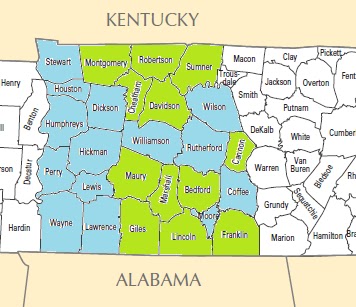
The approximate boundaries of the Middle Tennessee Conference in 1895. 
Counties in green had missionaries assigned to them in this conference report.


Monday, May 27, 2013

George W. Gwyn to the LDS Southern Star


A Letter
Elder G. W. Gwyn (Local)
Smyrna, Tenn., Jan 27, 1899
To the Southern Star.
As there is a goodly number of Elders traveling from door to door in the Southern States eagerly proclaiming the gospel of a risen Redeemer, undoubtedly they come in contact with some who regard our Elders as not being gentlemen. For why, they know not; only just because you are from Utah. Thinking perhaps a brief account of our trip to the West would be the means of doing some good we herewith give you the same. My home for the past twenty years or more has been a resting place for the Elders of Zion. During this time we have formed the acquaintance of quite a number of Elders each expressing that we must pay them a visit some day. Finally we decided to go. So on Oct 31 1898 in company with my wife and youngest daughter we left our Southern home Smyrna Tenn for the West. After having an enjoyable time on our way we arrived safely at Salt Lake City Nov 4, a complete surprise to my mother, still at the same time she said it would do. We had not been there long until some of the Elders whom we were intimately acquainted with namely Brigham H Roberts, President Snow's son and many others found out that we were in the city. They immediately began to make our visit as enjoyable as anyone could ask for. We were invited to dinners, suppers and to attend different entertainments which we enjoyed very much. We made the best use of every opportunity.
After spending a few nights in Salt Lake City we visited the beautiful city of Bountiful. Here we were again royally entertained by Elders and friends. Next we proceeded to Fairview, San Pete County. Here we were again made right at home and we had a regular jollification. The kindness shown to us both by Elders and friends will long be remembered.
During our short stay in Fairview I was very favorably impressed with it owing to the beautiful surroundings and the good Christian like bearing of the people The morals of this place were exceptionally good While we were there I don t remember hearing one profane word or see any one using tobacco. Would to God all places were more like it.
After having a very enjoyable time and feeling fully repaid for our visit we started and arrived safely at our Southern home once more Jan 15, 1899. Trusting that the “Star” will ever prove to be a potent factor in carrying on this great Later Day work.

Monday, May 20, 2013

The Wealthiest Man in Your Community - Elder Cullimore, Part 7

A continuation of Elder Cullimore's mission Recollections...

My companion, Elder Larsen, had been quite ill for a couple of weeks so we went to Nashville, our mission headquarters, so he could get medical care.  While there, the Conference President assigned me to labor with Elder J. S. Farrell.[1]  Our assignment was to visit saints in a number of the eastern counties of Tennessee before Elder Farrell was released to go home.

Our first stop was at George Gwyn's[2] at [Smyrna], Tennessee.  We found a direct fulfillment of a promise in the behalf of Brother Gwyn, made by B. H. Roberts while doing missionary work a few years earlier.  Elder B. H. Roberts had held a meeting in a school house in [Smyrna]; and after the meeting was over, everyone left and Elder Roberts was left alone.  A Mr. George Gwyn, a young man very poor and living in a one-room house, could not stand to see the preacher left alone; and he went back to ask him to go home with him.  He told Elder Roberts of his conditions at home and what he had, but said if he could put up with it he was welcome to come home with him.  Elder Roberts went with Mr. Gwyn. Mrs. Gwyn was rather put out at her husband's bringing the preacher home to their one room home.  They divided the bedding, putting part of it on the floor; then they invited Elder Roberts to take his choice of beds.  Mrs. Gwyn went outside while Elder Roberts went to bed; then she came in, blew out the lights and went to bed.

When they arose in the morning, Elder Roberts said to Mr. Gwyn, "You are now one of the poorest young men in [Smyrna].  I promise you that the Lord will bless you for what you have done, and I promise you in the Name of the Lord that you will live to be the wealthiest man in your community."

At our visit with him he surely was by far the wealthiest man in the community, and a good Latter-day Saint.

[1] Possibly James S. Ferrell of Alpine, Utah.

[2] George Washington Gwyn (1855-1917) was baptized on 19 April 1895 (His wife and several of his children were baptized in 1897) and in December of 1898 he and his wife Virginia "Jennie" Richardson Hager along with their youngest daughter (Fannie May Gwyn - age 7), made the trip to Utah  where they were family sealed in the Salt Lake Temple. George Gwyn was a farmer and, according to the 1900 census, the Gwyn family owned their farm free and clear, and had enough money to send (at least) his three youngest to school. (next week a letter from George Gwyn to the LDS Southern Star)

It is possible that this young man may have met B H Roberts in Wilson County, where Gwynn's family was from and where Roberts was actually preaching at the time Gwynn was a young man. Of course, this is Elder Cullimore's recollection and as such certainly isn't a primary source. Cullimore even misspelled Smyrna as Smyma. 

Monday, November 12, 2012

The New Murfreesboro Stake

Last week I became a member of Tennessee's newest stake: Murfreesboro. The change had been in the works for some time and at least once the effective date was postponed. Getting all the moving parts to work together proved too much. But as of November 4th, it became official.

The stake was formed from portions of the McMinnville Stake (Blackman, Murfreesboro, Shelbyville, Stones River 1st, and Stones River 2nd Branch) and portions of the Nashville Stake (Mt Juliet, Rock Springs, Smyrna, Buena Vista Branch, and Hermitage Branch). There was some additional moves of units from other stakes into McMinnville (Thompkinsville from the Madison Stake) and Nashville (Franklin 1st from the Franklin Stake) to keep those stakes large enough to remain stakes, so in total there were four stakes involved. Elder D. Todd Christofferson and Elder Alvin F. Meredith, both at one time stake presidents in Tennessee, attended the four stake regional conference.

The stake president from Nashville (Kevin M. Tipps) was made president of the new stake, and a new president (David R. Watson) was called for Nashville.

Just to give you an idea of the size of the Stake. It would take nearly three hours to drive from the north end to the south end, but less than an hour from east to west.


Monday, June 11, 2012

An Early Form of Identity Theft

You wouldn't think it would be profitable to impersonate someone who was so disliked in the antebellum Tennessee as a Mormon Elder. But that indeed is what this appears to be.

To the Editor of the Times and Seasons.Nauvoo, Feb., 28th, 1844.
DEAR SIR:-Information came to me recently, through a letter written by brother Reid and Holt, Rutherford county, Tenn., giving an account of an imposition practiced upon them and others of the same branch, by an impostor who came into that branch about the 15th of November last, professing to be an elder of this church, calling his name Lorenzo Hodges. He preached a number of discourses in that vicinity; telling them that he was wounded in the Missouri difficulties, and was unable to travel on foot; and that he left Nauvoo with a good horse and saddle, but being solicited to stop at a campmeeting, had his horse stolen; he could not proceed further on his mission without assistance. The branch, ignorant of his designs, and wishing to advance the cause of righteousness, readily fitted him out with a horse, saddle, bridle and martingils [martingales], worth at least one hundred dollars, which he took to use until he should return to Nauvoo, there he was to deliver up said property to the Temple committee, to be applied on their tithing. He started to visit the different branches of the church, with a promise of returning; left several appointments to preach, but has not as yet been heard of by them; and from the best information that I can gather, has gone to Texas. He is known in this city by the name of Curtis L. Hodges.
The matter contained in this communication is at your option.
Yours, sincerely,
JOHN D. LEE.

Monday, April 30, 2012

History of the Church in Rutherford County before the Civil War

In 1834, James and Lucinda Pace moved from Cripple Creek (which empties into the East Fork of Stone River) in Rutherford County, Tennessee to Shelby County, Illinois. James left behind much of his family, but Lucinda brought along her father, Judge Warren Gibson Strickland of Murfreesboro. There in 1839, they met Dominicus Carter (see note 1), who had recently been driven from Missouri. On 14 April 1839, James and his wife accepted baptism into the LDS Church. In September of that same year Almon Babbitt organized a branch of the Church in the area. On 15 April 1840 James was ordained a Deacon, and in June 1840, the Pace family left for Nauvoo. All along they were thinking of their relatives back in Tennessee.

In 1841 while Elder J. D. Lee (see note 2) was preaching in Overton and Jackson Counties, in Tennessee, he received a received a letter from James Pace who was a neighbor of Lee's in Nauvoo. In his letter, James asked Lee pay a visit to his brother William on Stone River. Lee agreed and with a letter of introduction, Lee and his companion traveled to Rutherford County to meet with William Pace.

On that same visit Lee and his companion Elder Dwight Webster, publicly debated with some Campbellite ministers.The debates went well for Lee and he baptized some influential people: Sheriff (see note 3) John Thompson and his wife, William Pace and his wife , Major D. M. Jarratt and his wife, Mrs. Caroline Ghiliam, Major Miles Anderson, and others. After a month, Elder Webster returned to Jackson County, while Lee spent the next six month preaching in and around Stone River. He ordained William Pace to the Aaronic Priesthood, probably to the office of Priest, and set him to preside over the branch. Elder Lee then returned to Nauvoo, stopping in Jackson and Overton Counties along the way.

In the winter of 1842-3, members of the "Branch of the Church on Stone River, Tennessee and Cripple Creek, Rutherford County Tennessee" sent a letter to the Church in Nauvoo, asking for them to send Elder Lee to continue the preaching efforts. It appears that most of the converts in the Stone River area had emigrated to Nauvoo. Captain John H. Redd was one of the few left and was behind the invitation to Lee to return. Redd explained to Lee that after those who favored the church had left, the mood toward Mormons in the area had soured. One missionary, Randolph Alexander, had even been run out of town.

Lee preached for months withstanding every attempt to silence him. He had run-ins with opponents of the Church from Missouri ad debates with ministers. Before he was done he claimed to have organized two branches and had made sixty converts. The second branch in Rutherford County was west of Murfreesboro. Lee "called it the Friendship Branch of Rutherford. [He]Set apart and ordained the following officers — Brother John Holt, an Elder; Wm. Holt, lesser Priest; Brother John H. Redd, Teacher and Clerk." (see note 4)

In 1843, a man professing to be a Mormon Elder conned the members in Rutherford County out of a horse and related gear worth a hundred dollars. He claimed to have been wounded in the Missouri troubles and was unable to walk long distances. Convincing the congregation that his horse was stolen they raised donations to secure him a new one. Once he had the horse, he left with the explanation that he was visiting a nearby branch. He was never seen again.

In 1844, a special conference was scheduled  in support of Joseph Smith bid for the U. S. Presidency on the 20 and 21st of July. It was part of a series of conferences held in several locations. Since Joseph was killed before the conference was held, the political aspects of the conference were dropped.

After 1844, few missionaries were sent to Tennessee, and just two made it briefly to Rutherford County. In 1857, Elder Blackwell and Murphy passed though Rutherford County briefly warning the saints that it was time to gather to Zion. Even with that warning, one couple William and Mary Ann Hickman, refused to go west to Utah. Sister Hickman recalled years later that the missionaries warned them that there would come a day when they would wish they had gone to Zion barefooted.

One by one branches dissolved due to emigration, attrition or death. The remnants of the branches set up before the war had faded beyond recognition when missionaries finally returned in the 1870's. But that is a subject for another post.

Note 1: Dominicus Carter (1806-1884) must have been a fast traveler. Dominicus married his first plural wife, Sylvia Ameret Meacham near Quincy in Adams County, Illinois on 28 March 1839. To make the journey, he would have to travel 160 miles in less than 17 Days. The Carter family does not record his serving a mission until 1844. New family search indicates an alternative baptism date for the Paces of 14 Apr 1837, though Pace family historians stand by the 1839 date. There was an unidentified Elder Carter preaching in Shelby County, Illinois in 1837. 

Note 2: John Doyle Lee wrote his memoirs many years later shortly before his execution for his part in the tragic events at Mountain Meadows. His memory of the details may be suspect.

Note 3: The Sheriff of Rutherford County in 1841 was Wilson L Watkins, though that does not preclude Thompson from being a deputy sheriff.

Note 4: This was found in a family history written by Laura Redd, as though it was quoting Elder Lee's journal. I have not been able to confirm the source yet.

Known converts:
John Thompson and his wife
William Franklin Pace (1806-1876) and his wife Margaret Elizabeth Nichols (1808-1887), 
Major David Mitchel Jarratt (1798-1867) and his wife Clemetine Charlotte Sanders (1824-1858), 
Mrs. Caroline Ghiliam, 
Major Miles Anderson (1798-1876) on the 4 Feb 1841 
and his wife Nancy Pace (1801-1875) on the 7 Feb 1841
Captain John Hardison Redd (1799-1858) baptized June 17, 1843 (Aug 1843 in LDS records)
and his wife Elizabeth Hancock (1798-1853) baptized June 17, 1843 (1 Jan 1842 in LDS records)
Venice (a slave of the Redd's) baptized June 17, 1843
Chenia (a slave of the Redd's) baptized June 17, 1843
William R. Hickman (-1869) and his wife Mary Ann Hickman (1812-)
William Holt (1820-1888) baptized June 1, 1842
Parson John Holt (1792-1872) baptized June 6, 1843.
Mary Redd Holt (1792-1875) baptized June 6, 1843
William D. Pace  baptized June 14, 1843
Harvey A. Pace  baptized June 14, 1843


Wednesday, December 22, 2010

Harvey Haynes: a forgotten member in a forgotten grave

In the front yard of a house just south of Ripley, in Lauderdale County, Tennessee is a small nearly forgotten cemetery. Only seven gravestones remain, the other stones were removed by a previous owner to make the property more sellable. One of the surviving markers, however, belongs to Harvey Jackson Haynes.
Harvey was born on March 12th, 1819 in Tennessee to Abraham and Sarah Haynes. Abraham had moved his family to Tennessee immediately following the war of 1812, and may have fought in the war. He could have received land in Tennessee as payment for his service or perhaps he moved there to take advantage of the new opportunities created by the land grants.

Harvey was a young man of 24 or 25 in Rutherford County, Tennessee when he met the Mormon missionaries. It was in 1844 that he was baptized, and most likely before Joseph Smith was killed in June of that year. He went to Nauvoo with the intent of joining the saints, but when they evacuated the city in 1846, Harvey did not follow. Instead he returned to Tennessee.

In the 1850 Federal Census, Harvey shows up back in Rutherford County (poorly transcribed as Harry J Haynes) living with his mother Sarah Haynes and his future wife Julia Posey. Harvey’s father had passed away 12 years earlier in 1838. A few years later Harvey and Julia are married, according the state records, on November 8, 1856. The Haynes family records show it was December 9, 1856, but do not have a source for the alternate date. It may be that the marriage license was obtained in November, but the wedding itself was not until December. At the time the state did not require couples to report back the actual marriage date.

On November 5th, 1858, Harvey’s mother passed away. And by 1860, the couple had moved to Lauderdale County in the far west end of Tennessee. They owned some land and there were some other Haynes family members in the area. It is likely he moved west with a few of his siblings. Harvey’s name is again poorly transcribed as Henry Haynes in the Federal Census.

In 1860 Harvey’s brother Mack William Haynes Sr., “...donated two acres of land to be a public burial ground.” The first to be buried there are three of Mack’s children: Emily, Susanna, and Robert, who all died at the same time.

Harvey and his wife had four children. In 1861 Julia had a daughter that they named Sarah J Haynes, after Harvey’s mother. On September 24, 1864 they had another daughter they named Virginia Barbara Haynes. In 1867 they had a son which they named John Joseph Haynes. John did not live long . He died on October 24, of the same year. He was buried in the cemetery his brother created. Family records show a fourth child, Robert Haynes, but Robert never shows up in the federal Census. It is likely he did not live very long either.

In 1870, Harvey is listed (mistranscribed as Harvey Hames) with his wife and two daughters ages 9 and 6. Sarah moved out at age 17 when she married Egbert G. Brogdon in 1878. The 1880 Census shows them with just Virginia and some boarders. On December 12th, 1882, Virginia married J. W. Glimp.

In 1896, Julia passed away leaving Harvey a widower at the age of 77. They buried her in the same cemetery with her son John. Harvey moved in with his daughter Virginia where he shows up in the 1900 Census.

Harvey remained faithful to the LDS Church, although there wasn’t always a church to attend. When missionaries came around again he remembered his baptismal covenants. “He never denied his testimony to the divinity of the mission of Joseph Smith.” In 1908, Harvey’s health took a turn for the worse. On October 6th, 1908 “...he died a member of the Church. Funeral services were conducted by the elders” Harvey was buried in the same cemetery with his departed wife. It reads...

H.J. Haynes born Mar 12, 1819
Died Oct 6, 1908
our father & grandfather

Over the years the graves were forgotten. The rest of the Haynes family moved on to Texas and Arkansas. Wthout constnat care, bushes and weeds covered some of the stones. And others were quietly removed to prepare the land for sale. Eventually the property was sold, in 1965, to the Mills family without their knowing it had a cemetery on it. They built a house on the property in 1968. But while clearing some brush near the road, they found some old stone markers. Realizing what they meant, Leonard Mills cleared away the underbrush and planted flowers and shrubs. He located the remaining stones which included Harvey, his wife Julia, and one of their children, John. Other markers were for their son-in-law J. W. Glimp and two grandchildren. All the other stones had long since been lost.

Today the Mills family takes care of grave makers in their front yard, and in tribute to the love and care for this nearly forgotten cemetery, when one of their own grandchildren passed away in 1990, they buried him alongside the others.